Dental Trauma in Laval
Fractured, displaced or knocked-out tooth after a blow?
Dental trauma must be treated within the first few hours to give the tooth the best chance of being saved. Our team sees you as an absolute emergency.
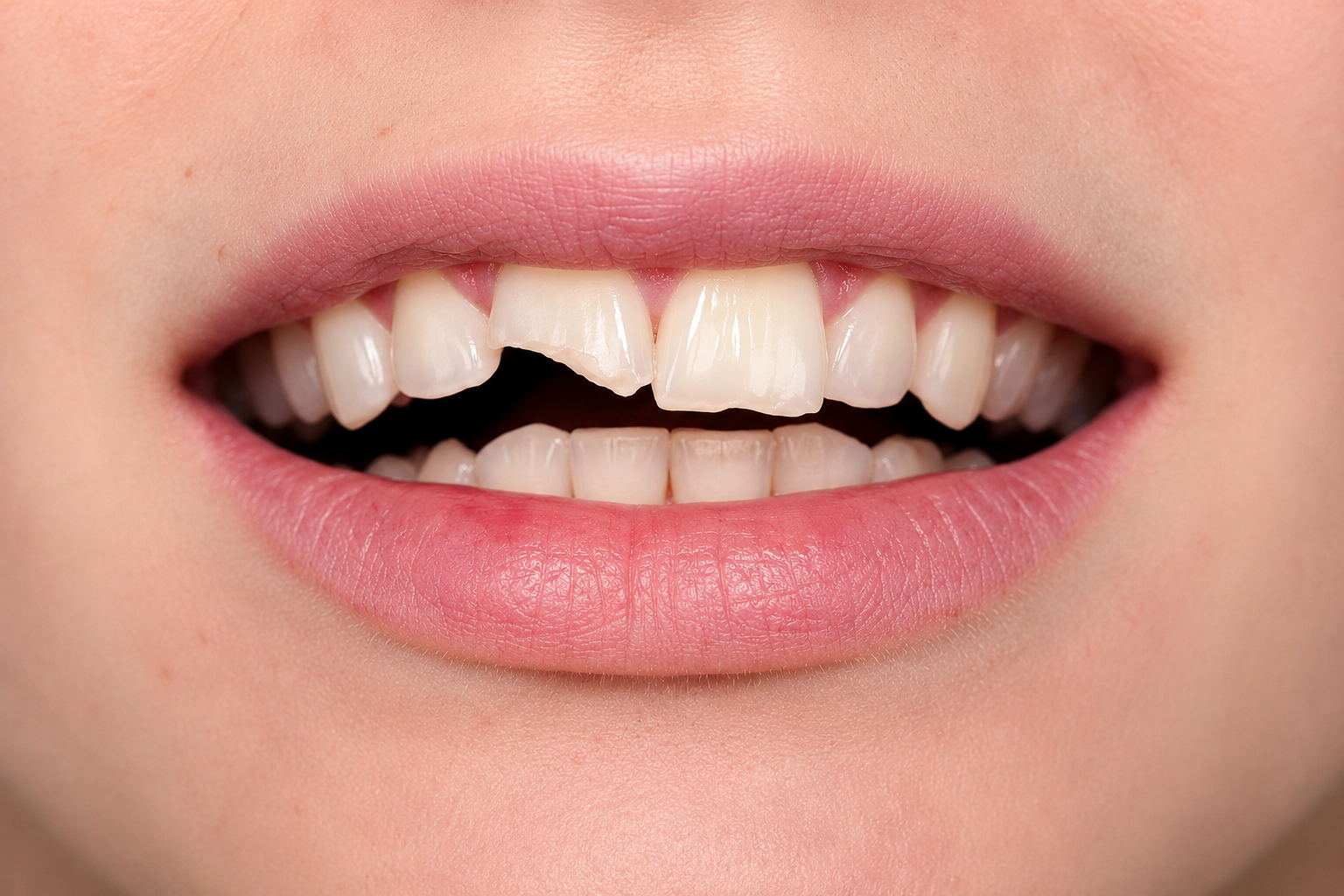
What is dental trauma?
Dental trauma is an injury caused by an impact or accident affecting the teeth, the gums or the structures that support them. It can happen during:
- A fall
- A car accident
- A bike or scooter accident
- A sports activity
- A blow to the face
- A workplace accident
- A fight or an accidental knock
- And more
Even if the pain seems mild, a trauma can cause damage that is invisible to the naked eye. A quick consultation prevents major complications.
See us urgentlyWhat kind of trauma have you had?
From a simple knock with no displacement to a knocked-out tooth, every level of trauma has its own urgency and its own treatment.
Knocked-out tooth (complete avulsion)
The tooth was pulled entirely out of its socket after an accident, a fall or a contact sport. Absolute emergency: keep the tooth in milk, don't touch the root and call immediately. The window is 30 to 60 minutes.
Absolute emergency — 60 minLuxated or heavily displaced tooth
The tooth is still in the mouth but has moved from its original position after the blow. It is tilted, pushed in or partially pushed out. Treatment must happen within hours to prevent pulp necrosis.
Critical emergencyFracture with exposed pulp
The blow fractured the crown deeply enough to expose the pulp (the nerve). The pain is sharp and the area is sensitive to air and cold. Without prompt treatment, infection sets in and the tooth is lost.
Urgent — treat within 24hCrown fracture without pulp exposure
The tooth is chipped or fractured but the pulp is unharmed. The pain is moderate. A quick restoration protects the tooth from a deeper fracture and prevents increased sensitivity.
UrgentBlow without displacement (concussion)
You took a hit but the tooth appears to still be in place. It may be slightly tender to the touch. An X-ray is needed to rule out an invisible root fracture and to monitor the pulp's vitality.
See us within 48hTrauma in children
Trauma to baby teeth or to permanent teeth still coming in requires a specific assessment. A knocked-out baby tooth is not reimplanted, but a consultation protects the developing permanent tooth beneath it.
See us quicklyUntreated trauma can destroy your tooth for good
The complications of an ignored dental trauma get worse over time. Here's what happens if you wait.
Pulp necrosis
After the impact, the tooth's nerve can die silently, with no obvious pain. A few weeks later, an abscess forms at the root. The tooth darkens and has to be extracted if a root canal isn't done in time.
Ankylosis and root resorption
The tooth's root fuses to the bone (ankylosis) or is gradually resorbed. The tooth can no longer move naturally and eventually breaks or collapses into the bone. Common after a late or poorly performed reimplantation.
Bite and jaw problems
A fractured, displaced or missing tooth changes the way you bite. This leads to TMJ pain, teeth grinding, chronic headaches and premature wear on the remaining teeth.
Permanent aesthetic damage
A darkened, visibly fractured or missing tooth affects your smile and your confidence. The later the treatment, the more complex, lengthy and costly the aesthetic reconstruction becomes.
How we take care of you
Every dental trauma follows a precise protocol to give the tooth the best chance of recovery.
Call and real-time guidance
Our team guides you live: how to secure the tooth, manage the pain and get to us as quickly as possible. A priority slot is held for you right away.
Emergency reception on arrival
No waiting room for trauma cases. You are taken in the moment you arrive, straight to the chair.
Full X-ray assessment
Immediate digital X-rays to assess the root, the alveolar bone and the neighboring teeth. Diagnosis in minutes.
Vitality test and precise diagnosis
Pulp test to check whether the nerve is alive or compromised and to choose the right treatment.
Treatment and follow-up plan
Reimplantation, splinting or root canal depending on the diagnosis. Follow-up visits at 2 weeks, 1 month and 3 months.
Our treatments for dental trauma
From emergency reimplantation to post-trauma follow-up, our team handles every dental trauma with the most advanced protocols.
See us urgently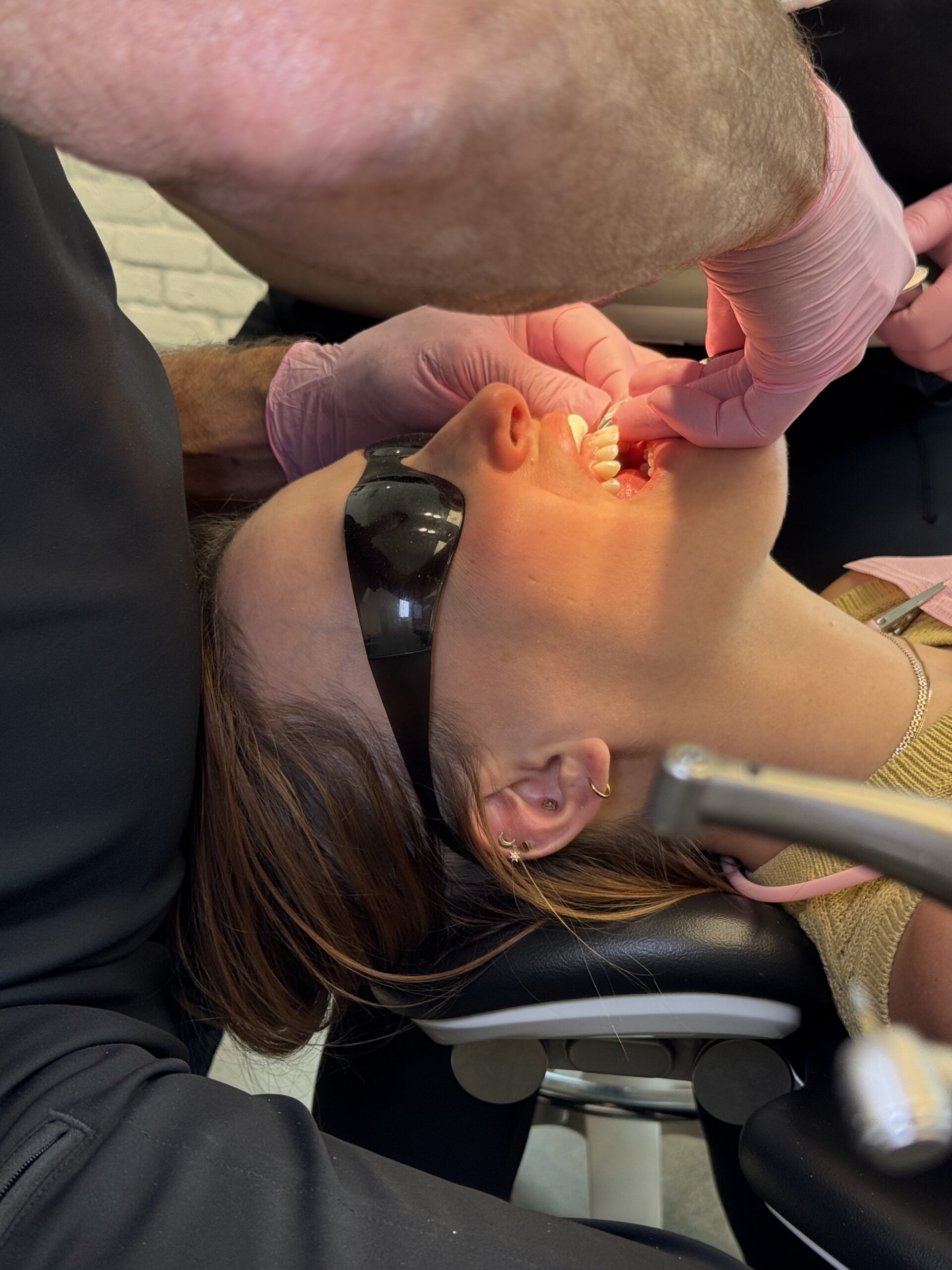
Emergency reimplantation
The natural tooth is placed back in its socket and stabilized with a splint. Success rate close to 90% if you act within the first 60 minutes.
Book an appointment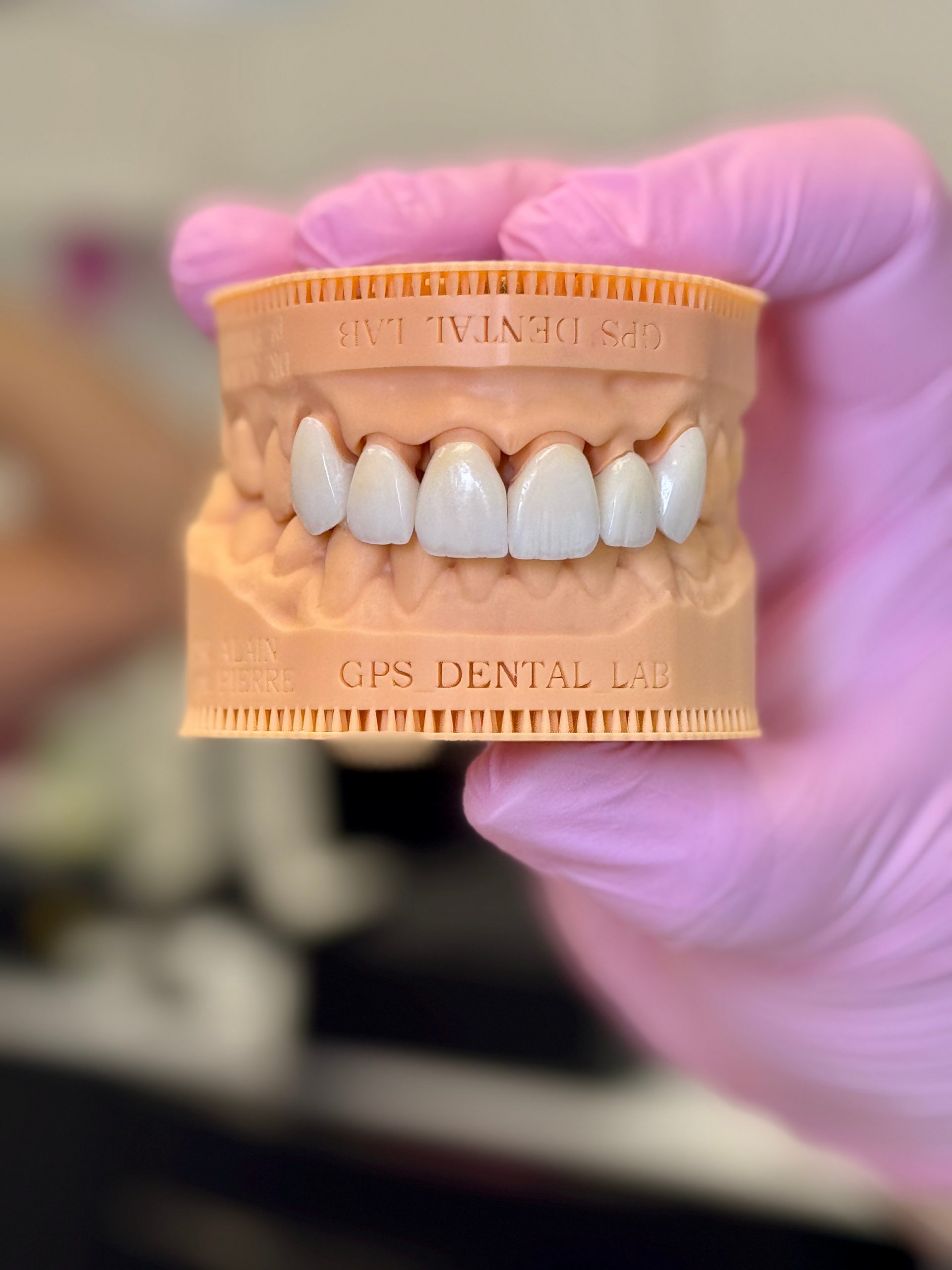
Dental splinting
A flexible splint attached to the neighboring teeth to stabilize a luxated or reimplanted tooth. Worn for 2 to 4 weeks, it allows the periodontal ligament to heal completely.
Book an appointment
Emergency root canal
If the pulp is exposed or necrotic after the trauma, an endodontic treatment is performed to save the tooth. Done under full anesthesia — no pain.
Book an appointment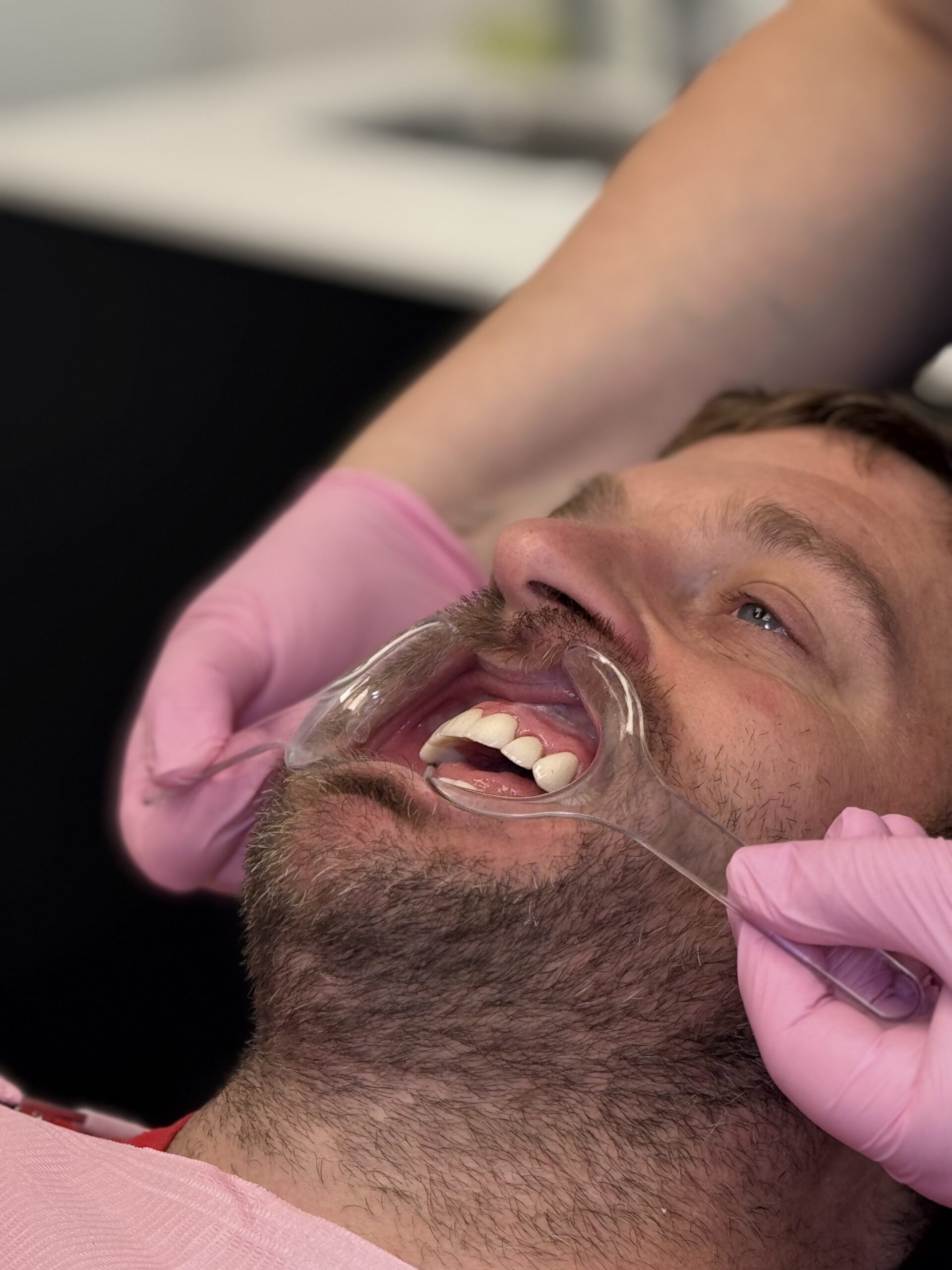
Restoration and crown
Rebuilding the fractured tooth with composite, an onlay or a ceramic crown depending on the extent of the fracture. A natural, strong and long-lasting aesthetic result.
Book an appointment
Post-trauma dental implant
If the tooth cannot be saved, an implant is the permanent solution closest to a natural tooth. Placed directly in the bone once it has healed, it can last a lifetime.
Book an appointment
Post-trauma follow-up
Follow-up protocol at 2 weeks, 1 month, 3 months and 1 year to monitor pulp vitality and catch any early root resorption before it becomes irreversible.
Book an appointmentWhy choose our clinic?
Fast emergency care
We take you in as a real emergency — no waiting list — to assess and treat your trauma without delay.
Certified IADT protocols
Our dentists follow the protocols of the International Association of Dental Traumatology, the global benchmark in trauma dentistry.
Instant digital imaging
On-site digital X-rays in seconds, to catch fractures invisible to the naked eye from the very first visit.
End-to-end support
Emergency, treatment, follow-up and insurance: everything is handled here, so you don't have to coordinate several specialists.
They trust us

A dental trauma? Don't wait.
Our team is set up to handle traumatic emergencies. Don't waste any time.
- Immediate care, no waiting list
- IADT protocols for every type of trauma
- On-site digital X-rays
- New patients welcome
FAQ about dental trauma
Yes, absolutely. A concussion or subluxation can cause silent pulp necrosis — the nerve dies with no immediate pain. Weeks later, an abscess may form. An X-ray and a vitality test are essential, even without any obvious symptoms.
Rinse it gently under cold water for 10 seconds max (don't scrub). If possible, place it back in its socket and bite down softly to hold it there. Otherwise, keep it in whole milk, your saliva or a saline solution. Never in tap water — osmosis destroys the ligament cells in under 15 minutes.
Every trauma in a child deserves a consultation, even if the tooth appears to be in place. Root fractures and pulp injuries are often invisible. In baby teeth, the main risk is damage to the developing permanent tooth underneath.
No. The procedure is done under full local anesthesia. You don't feel anything during it. Mild to moderate pain may occur in the following 24 to 48 hours, easily managed with standard painkillers.
Around 85 to 90% when action is taken within the first 30 minutes and the tooth is properly stored. The rate drops sharply after 60 minutes. At 2 hours, reimplantation has little chance of long-term success. Speed is the number one factor.
Between 2 and 4 weeks depending on the type of trauma. For a simple luxation, 2 weeks are usually enough. After a reimplantation or a severe luxation, 4 weeks are recommended. The splint is flexible and relatively discreet.
Most dental insurance plans partially cover traumatic emergencies. Reimplantation, emergency root canals and crowns are generally covered at 50 to 80%. If the trauma is linked to a car or sports accident, your accident insurance may also apply. We help you file your claim.
Yes. Pulp necrosis and root resorption can appear weeks or months after the initial trauma. That's why follow-up at 1 month, 3 months and 1 year is essential after any dental trauma, even when it was treated successfully.
Have you had a dental trauma?
Don't let the situation get worse. Contact our team today for a fast assessment and to get the care you need.
